Secondary Metabolite Research
Phytochemical research and bioactive compound analysis at SHRIM Bioinnovation & Research.
Secondary metabolites are naturally occurring compounds produced by plants and microorganisms. These compounds often possess important biological activities including antimicrobial, antioxidant, and medicinal properties. Our laboratory performs extraction and analysis of these compounds from plant sources.
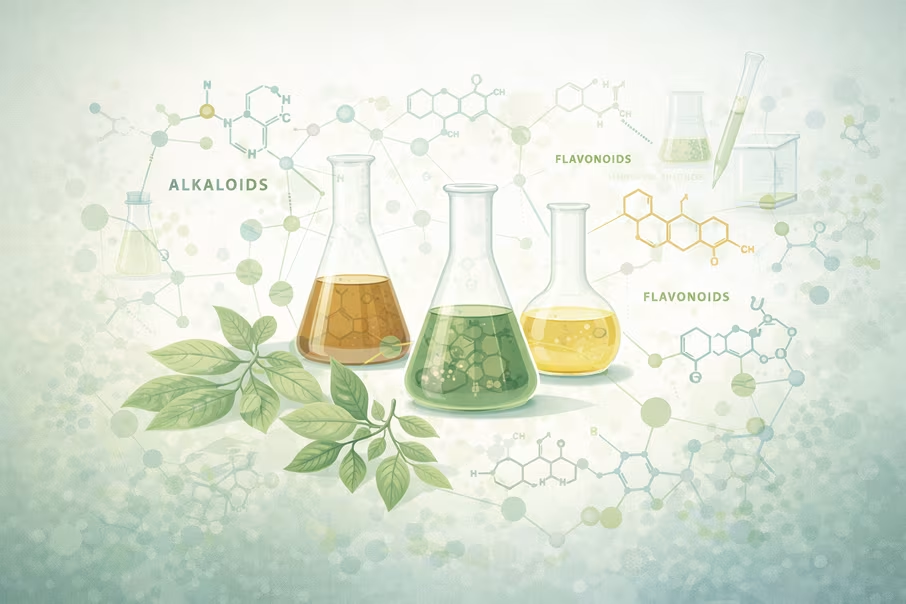
What Are Secondary Metabolites?
Naturally occurring compounds in plants and microorganisms that carry significant biological and medicinal activity.
Unlike primary metabolites which are essential for basic cellular function, secondary metabolites serve as chemical defences, signalling molecules, and bioactive agents — making them key targets for pharmaceutical and nutraceutical research worldwide.
Research Activities
- Phytochemical Extraction
- Compound Isolation
- Bioactivity Analysis
- Antioxidant Activity Studies
- Antimicrobial Compound Testing
Applications
- Pharmaceutical Research
- Herbal Medicine Development
- Nutraceutical Discovery
- Agricultural Biotechnology
Research Relevance
Phytochemical research at SHRIM directly contributes to understanding how plant-derived compounds can be used as leads in drug development, expanding the scientific knowledge base in applied botany and natural product science.
Frequently Asked Questions
Q. What are secondary metabolites in plants?
Secondary metabolites are organic compounds produced by plants that are not directly required for growth or reproduction, but serve ecological roles like defence, pollinator attraction, and competition. Scientifically, they are rich in biological activity and studied for pharmaceutical potential.
Q. What is phytochemical analysis?
Phytochemical analysis involves the qualitative and quantitative detection of plant-derived compounds such as alkaloids, flavonoids, tannins, saponins, and terpenoids. It is used to identify and profile the bioactive content of plant extracts.
Q. How is antioxidant activity measured in the laboratory?
Antioxidant activity is typically measured using assays such as DPPH radical scavenging, ABTS assay, and reducing power analysis — standard methods in phytochemical and nutraceutical research.
Q. Can MSc students do phytochemical research at SHRIM?
Yes. MSc students can conduct phytochemical and secondary metabolite studies as part of their dissertation projects at SHRIM, under the guidance of our research team and with access to extraction and analytical equipment.
Q. What types of plants are used in metabolite research?
Medicinal plants, endemic species, and economically important crops are commonly used as research material. Plant choice depends on the research objective — whether for antimicrobial screening, antioxidant analysis, or ethnobotanical studies.